case study / 2026
a pulse survey that listens back
A national philanthropic foundation
Lead designer and developer
90%
response rate
45
stories collected
3
weeks to build
9/10
working groups found the same problem
The challenge
A national foundation wanted its annual all-staff gathering to reconnect its employees to a strategy that was almost two years old. Nearly half of them had joined after it launched. We needed a mechanism to understand sentiment and engagement with the strategy in order to build a baseline for the event. What became clear in early conversations was a need to not just understand whether people agreed with the strategy, but where they could not see their own work in it and where cross-team work got stuck.
The work
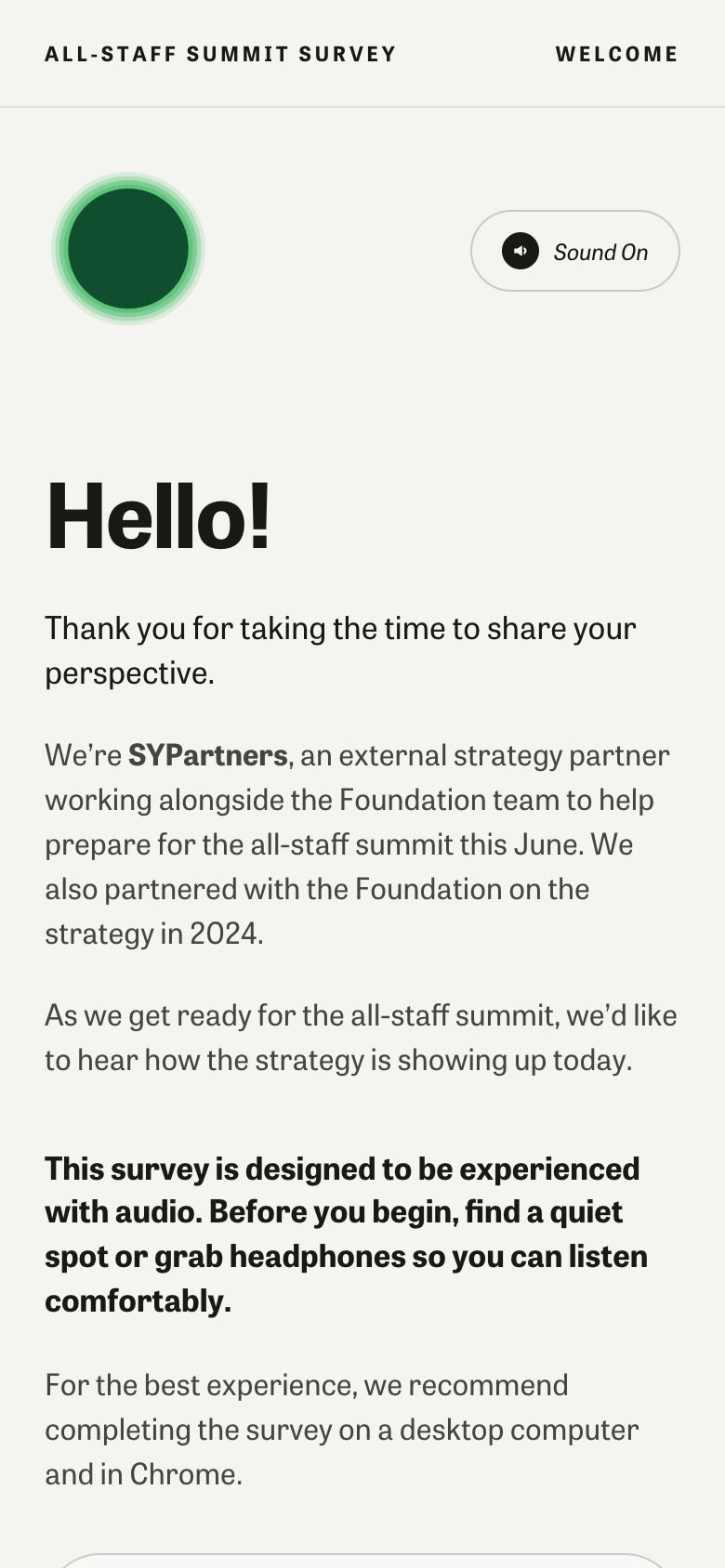
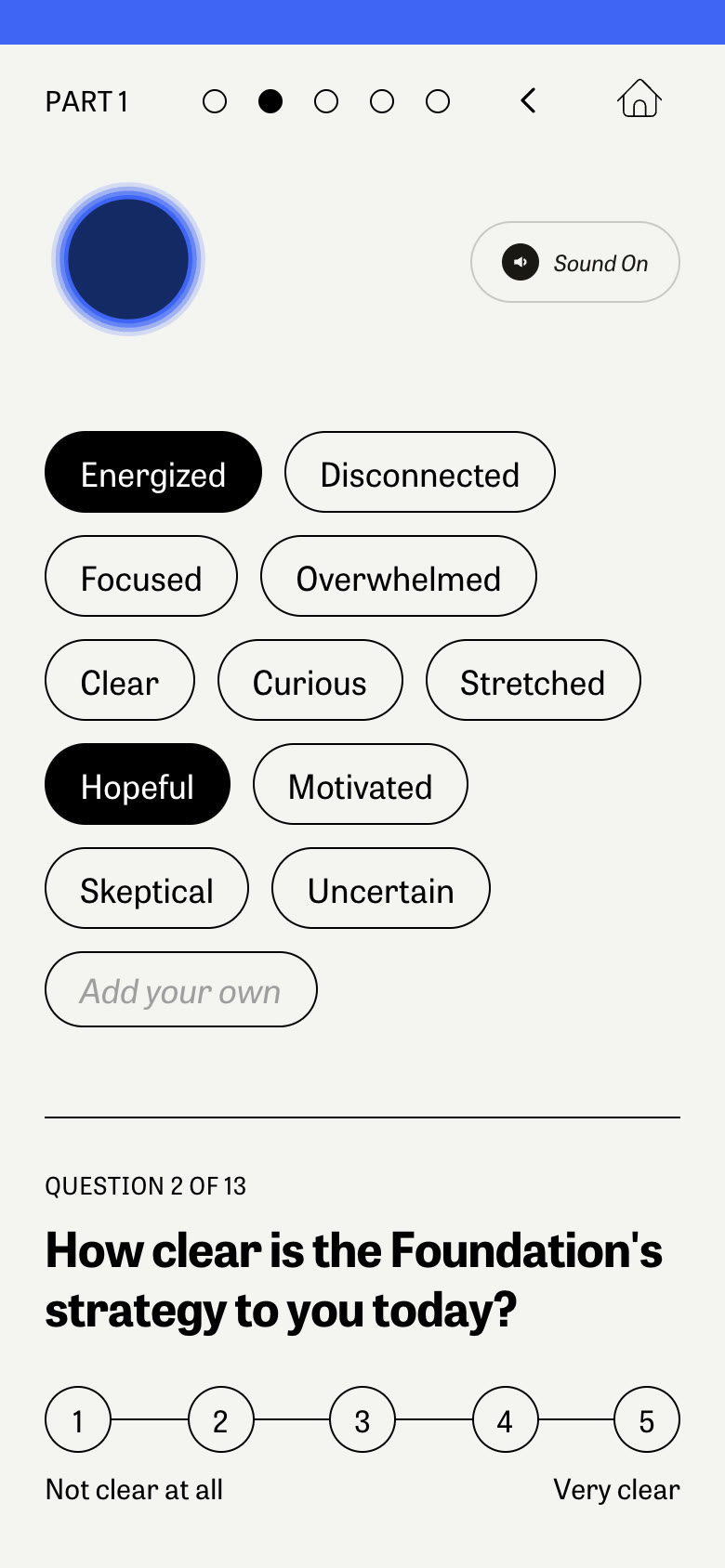
We built the survey as a single personal link with two parts that ask for different things. The first is an anonymous pulse check to understand how clear the strategy felt, how it showed up in day-to-day work, and which of the organization's values were hardest to live. The second invites people to tell a story about a moment they saw the strategy come to life. This part is attributable, because the stories were going to be celebrated at the event.
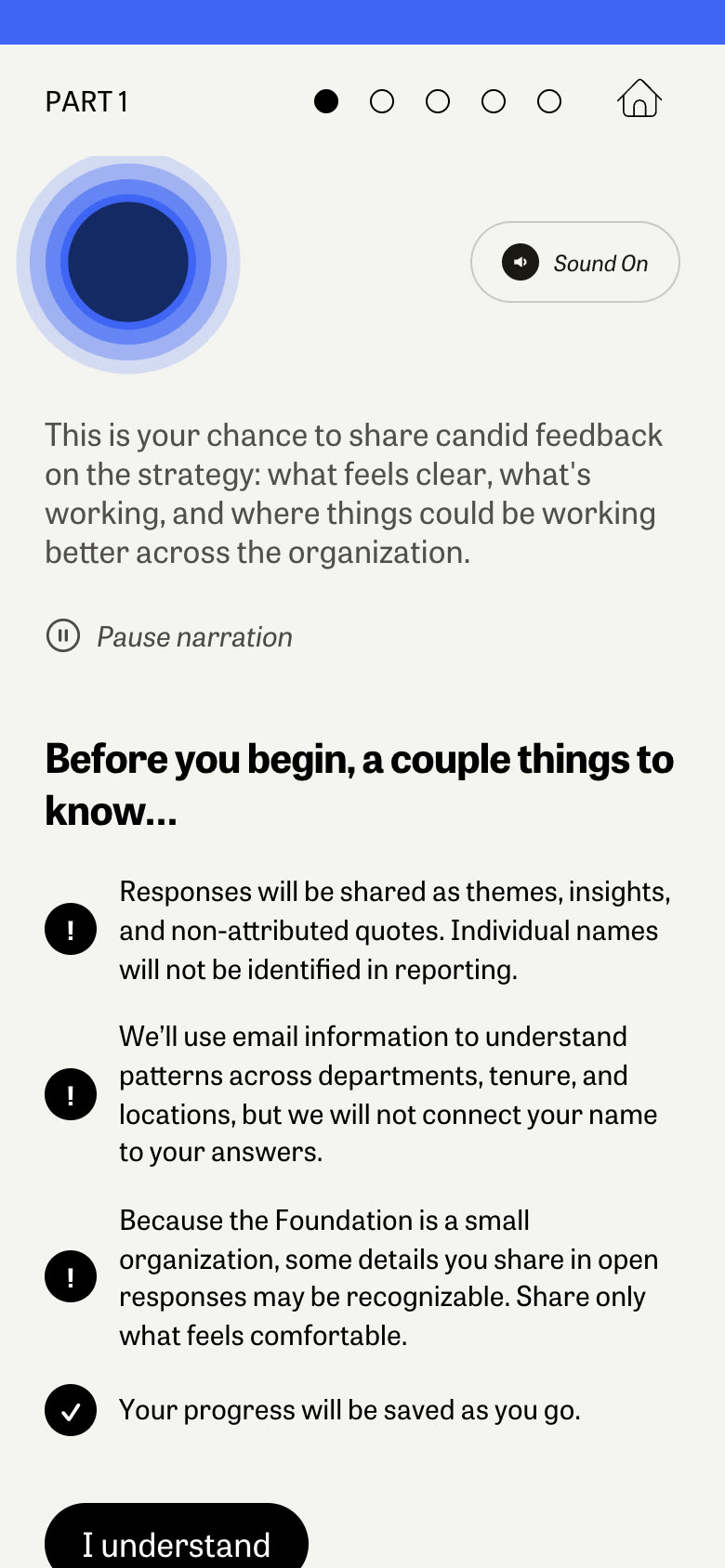
Trust was the harder design problem. In an organization of fewer than a hundred people, a few details can make someone recognizable. We worked through the consent language with the client's core team to make it clear what would happen to the data: themes and unattributed quotes, with email used only to look at patterns by department, tenure, and location. The system was designed to avoid summarizing any group smaller than five.
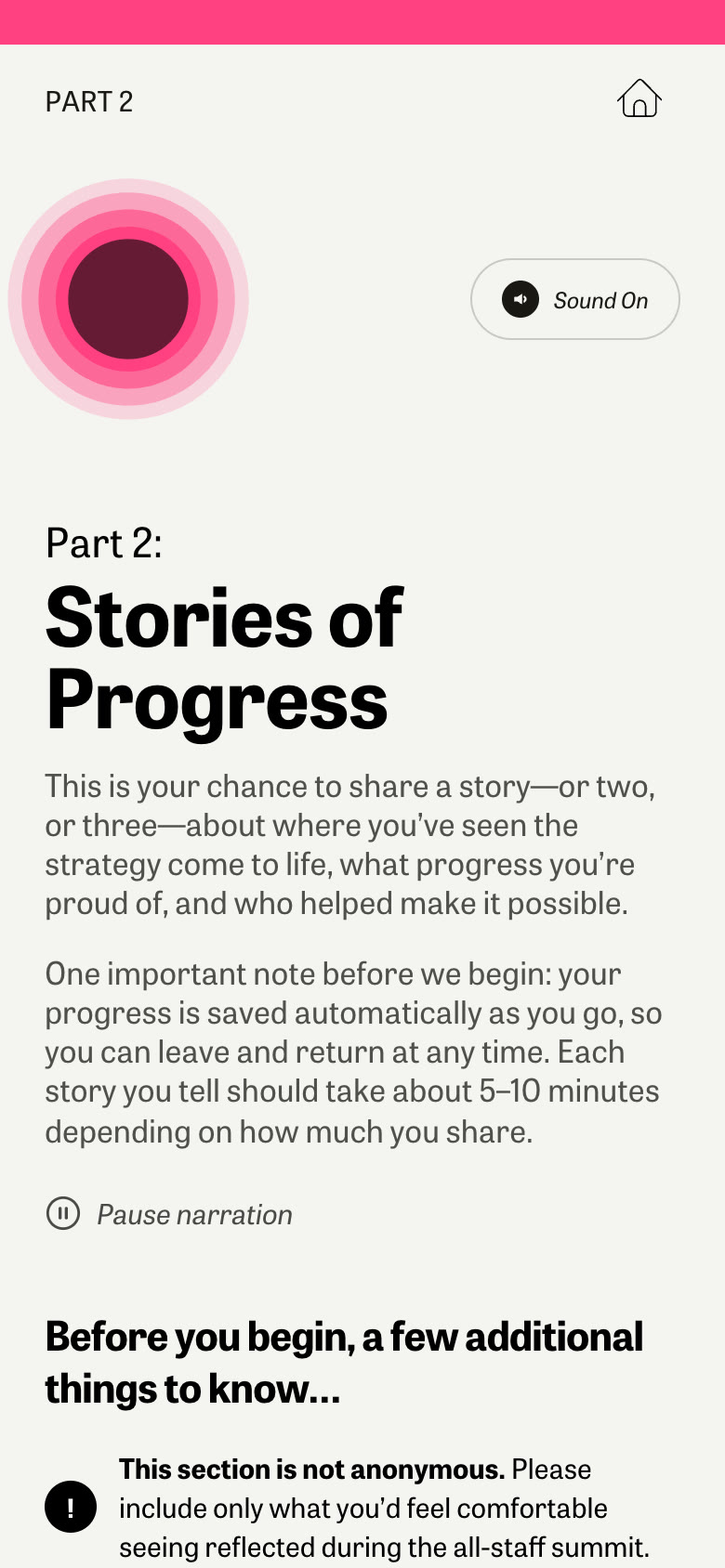
The story half is a conversational interview with Carl, an AI interviewer we built on Gemini's live voice model. Designed to sound and feel like an oral historian for the company, he asks five questions, follows up if an answer is too shallow, reads the story back, and lets you edit it before submitting. The model also decides what appears on screen as the conversation moves along.
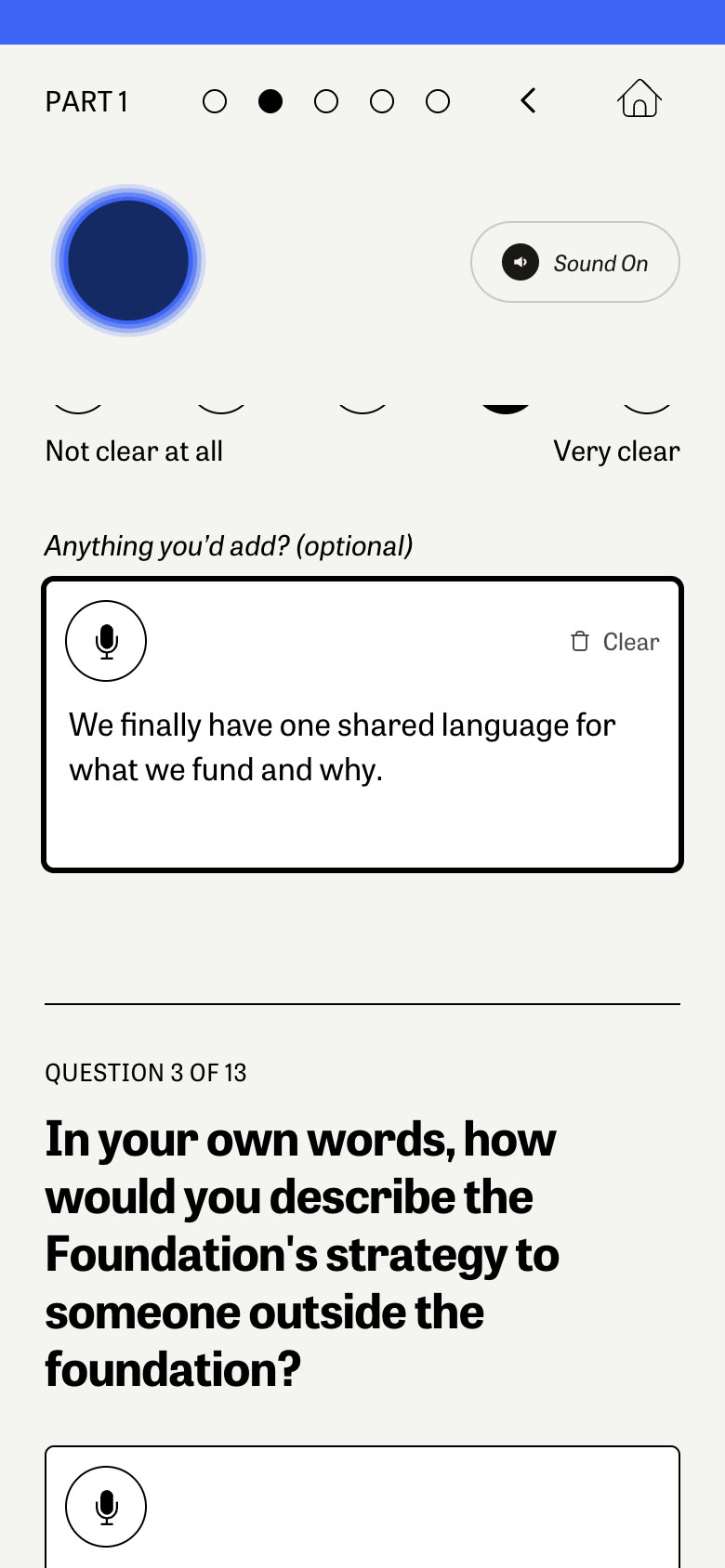
The pulse half is more straightforward, but we wanted it to feel less like a form and more like being asked a question by someone who is listening, without turning it into a chatbot. Carl introduced each section and then stepped back to allow space to think, and every open question can be typed or dictated. I built the whole thing in about three weeks, on Next.js and Supabase hosted on Vercel. Identity and responses live in separate parts of the database, dictation runs on OpenAI's realtime transcription, and the narration was generated ahead of time with Gemini's speech model so the survey stayed cheap and predictable. A bespoke admin app handled the roster and invitations, then turned the open answers into themes and exports for the team building the event.
The impact
The survey had a 90% response rate, and we had collected 45 stories. Within days of the survey closing, its themes had become the five walls of a gallery and the stories a listening room where staff heard colleagues in their own voices. Nine of ten working groups at the event landed on the same cross-team problem the pulse had surfaced. The client's core team said they were "incredibly impressed" at how fast the results became finished work, and the survey now lives on as a reusable kit inside our firm.
next
a touch wall a room can vote on →
Looking to Hire?
© 2026 Tim Macholz. All rights reserved.