case study / 2026
finding out whether the print studio pays for itself
SYPartners
Designed and built solo
6
leased printers
1/3
of jobs sat in a catch-all account
7–10
years since the rates were set
The challenge
SYPartners runs an in-house print studio, and bills the prints back to clients, tenants, and internal budgets. In early 2026 we realized the rates behind those charges were severely outdated. The question I wanted to answer was whether the studio was covering its own costs. PaperCut, which meters every job, made that difficult: its reports are poor, it records a job code rather than a client, and about a third of all jobs had been charged to a catch-all account. Finance was billing from exports pasted into a spreadsheet, requiring hours of manual process to work around an outdated system.
The work
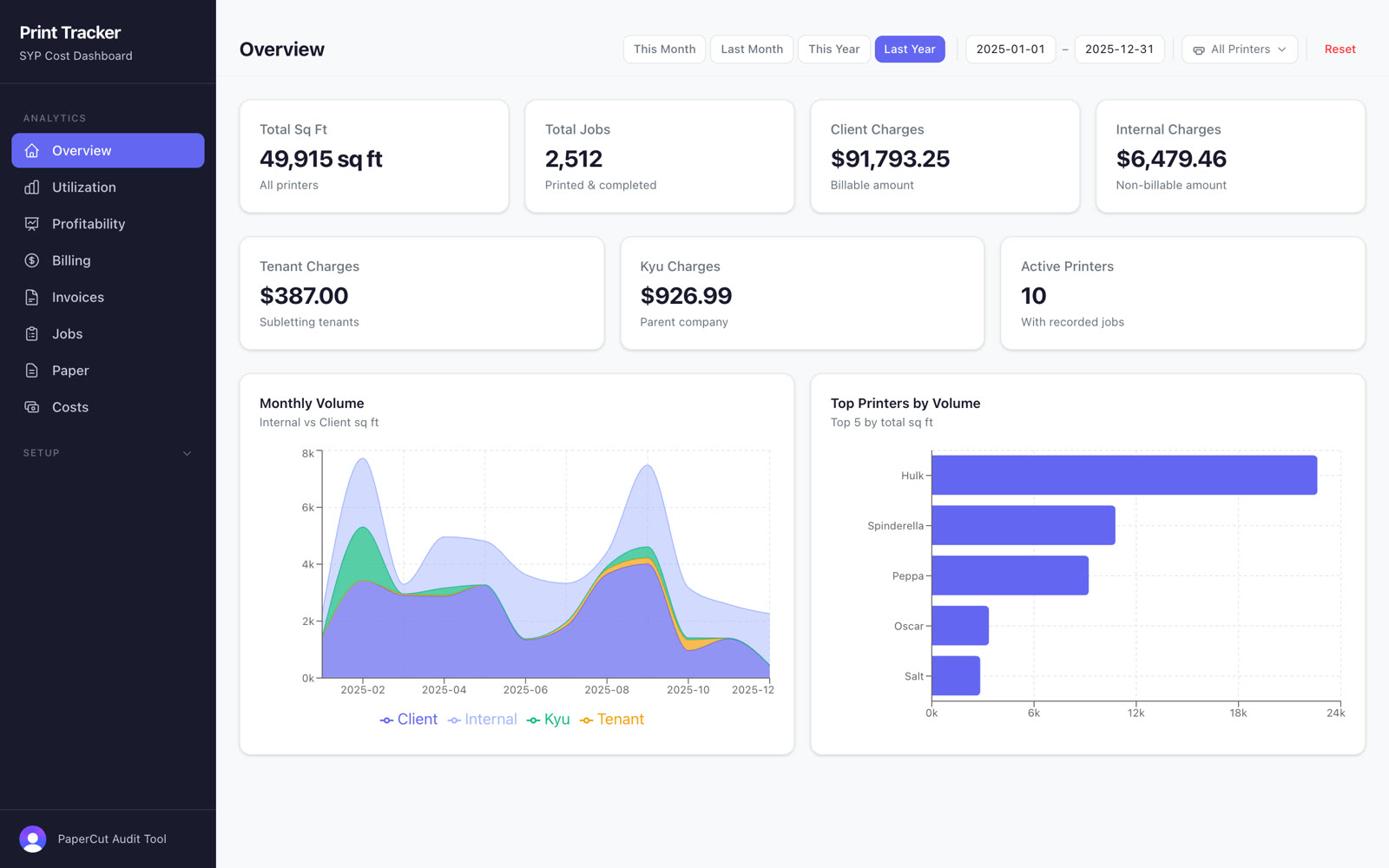
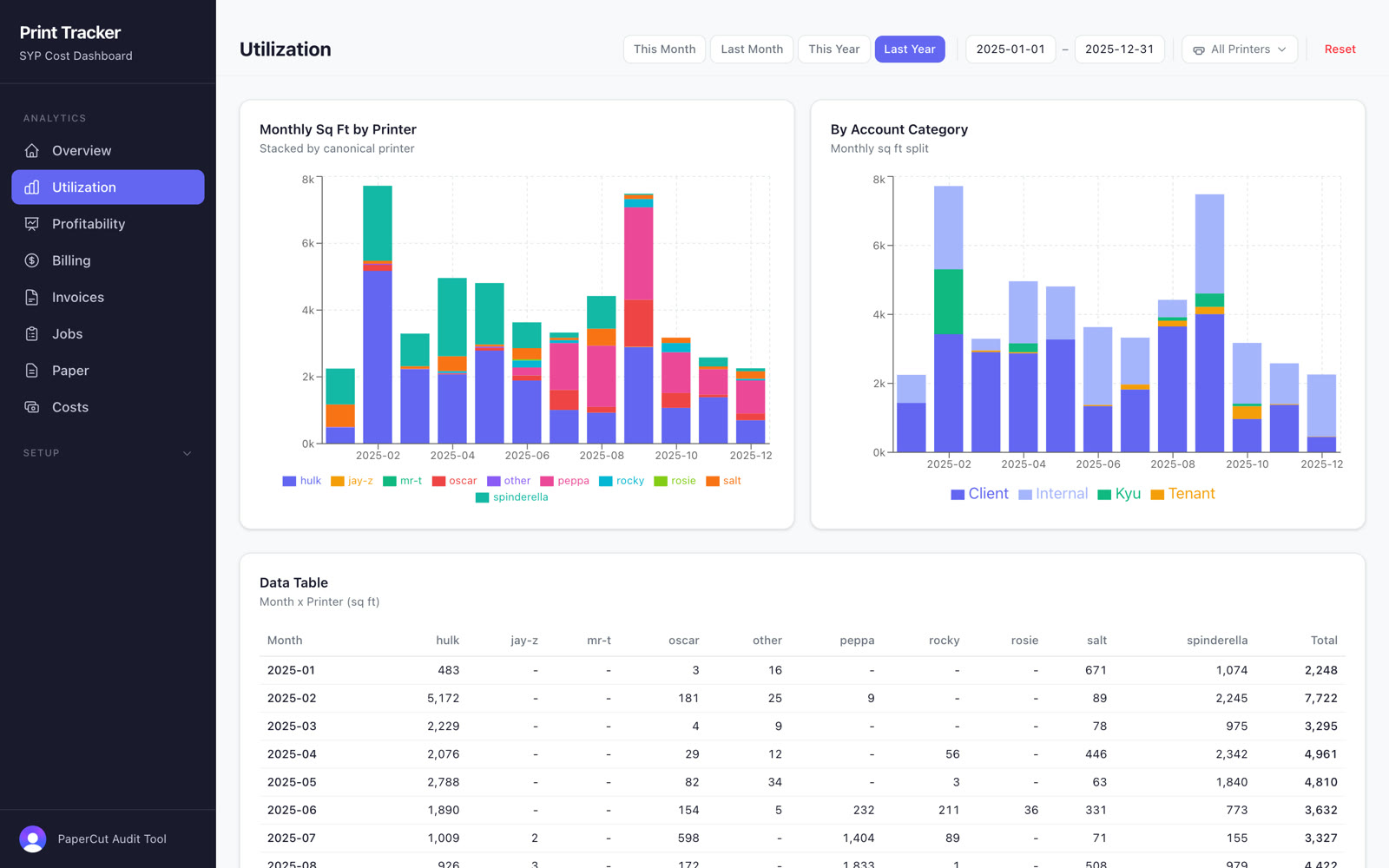
I built a dashboard on a copy of the PaperCut database in a few days: jobs, square footage, and charges split by client, tenant, internal, and parent company, and utilization by printer. I integrated a cost model that carried lease payments forward month to month, priced paper per job from the stock it ran on, and spread overhead by volume. A profitability page set that against real revenue and let you model rate changes per category and find each machine's break-even. In the March review it showed that most of the shortfall sat with the two general office printers rather than the production machines, and it caught one large-format machine charging a fraction of the rate everyone assumed. A colleague at the first demo: "We have never got here. In years."
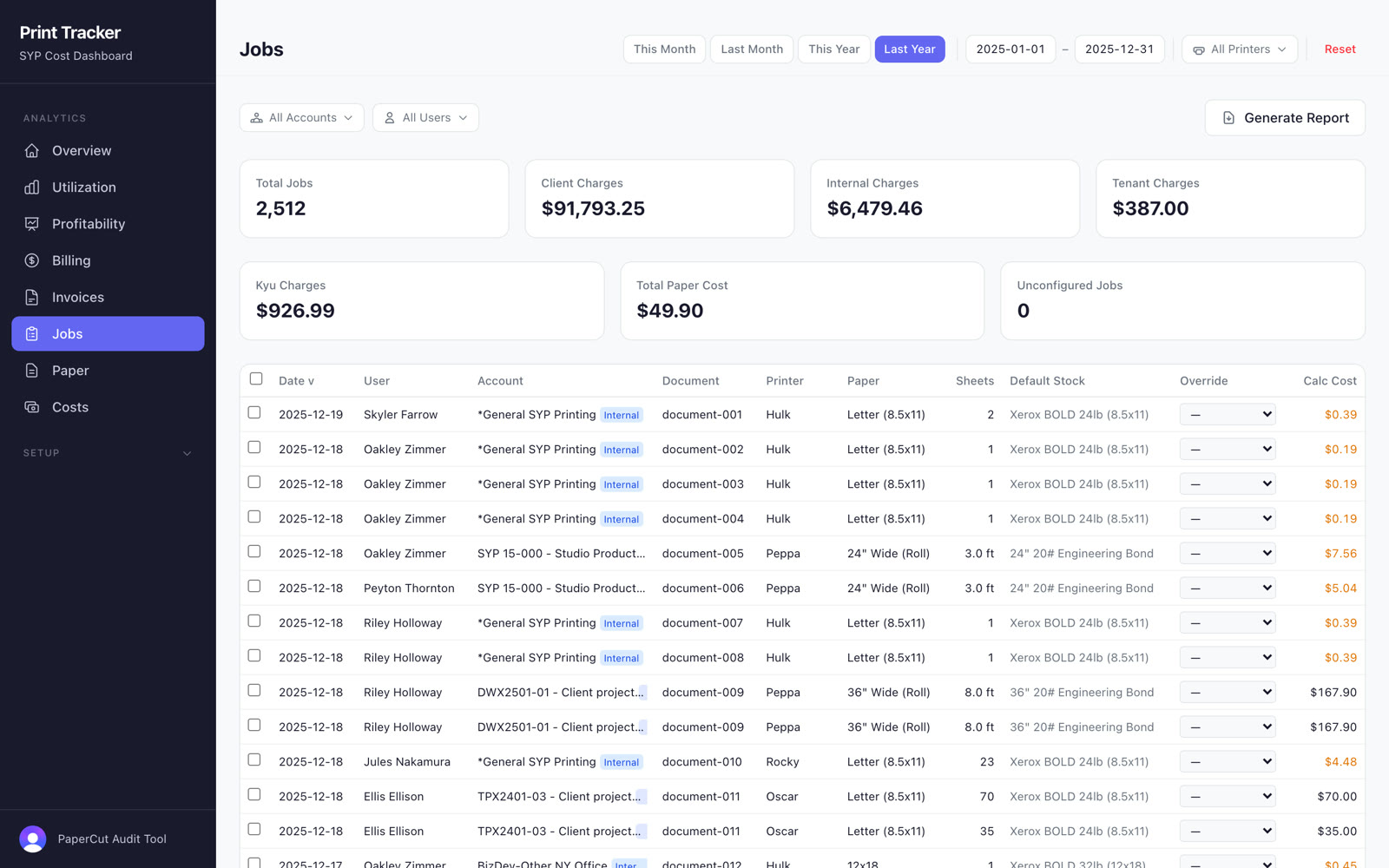
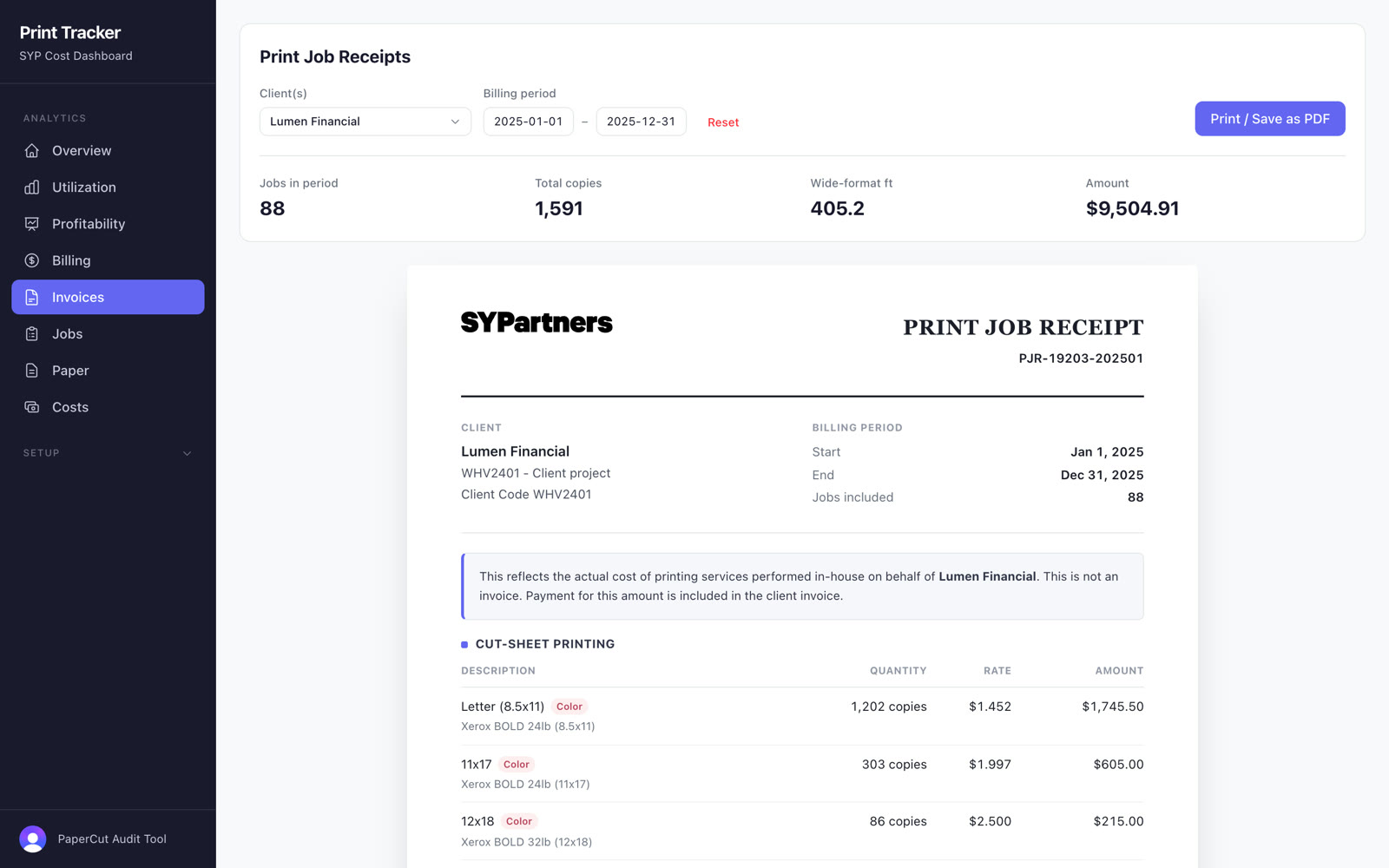
Over the summer the tool turned into finance's billing instrument. I connected it to the company data warehouse instead of a stale dump, and built a client receipt: pick a client across its project codes, set the exact billing window, and get a print-ready itemized document. Getting it right meant rounding at every level so totals matched PaperCut to the cent, storing account corrections in a sidecar table so they survive the nightly re-sync, and resolving client names from Salesforce with Intacct as fallback. After a month of silent staleness produced empty receipts, the sync became a daily cron.
The impact
Finance now produces client print receipts from the tracker instead of spreadsheets, and when a client asks for a paper trail, they have it the same afternoon. Leadership also got its first real picture of print economics, which has helped to inform future lease strategy. We have plans to now roll this tool into our overall project health dashboard in order to better understand the full picture of consulting financials.
next
one place to make images and video with AI →
Looking to Hire?
© 2026 Tim Macholz. All rights reserved.